If you walk down any street in Seoul—or even a quiet village lane in Jeju—you are never more than a few minutes away from a glowing neon sign. Whether it’s GS25, CU, or 7-Eleven, the Korean pyeon-ui-jeom (convenience store) is far more than a place to grab a quick pack of gum. It is a cultural hub, a social sanctuary, and a literal lifesaver.
For many foreigners, a convenience store is a place of transition—you go in, you buy, you leave. But in Korea, it’s a destination. It’s where students study, where office workers decompress after a long shift, and where friends gather for a budget-friendly “cheers” under the stars.
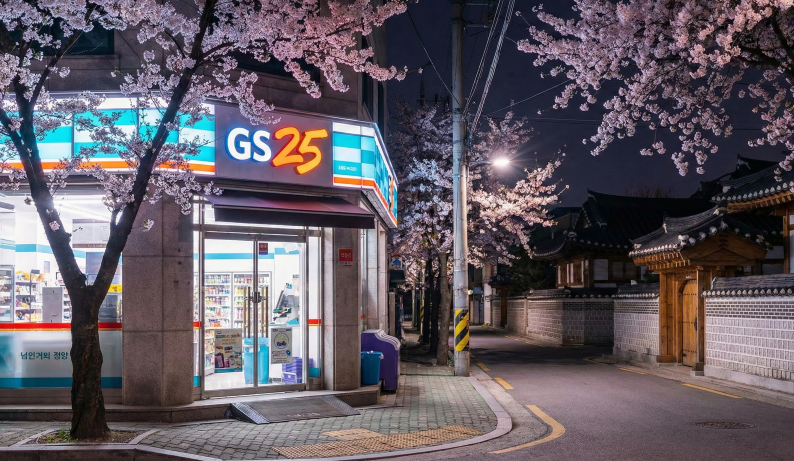
A Seasonal Symphony in a Plastic Cup
One of the most charming aspects of Korea local life is how these stores change their personality with the seasons. They aren’t just selling products; they are selling the feeling of the time of year.
- Spring: As the cherry blossoms bloom, the shelves turn pink. You’ll find limited-edition cherry blossom popcorn, peach-flavored drinks, and even floral-scented wet wipes. It’s the perfect time to grab a seasonal bento box and head to the nearest park.
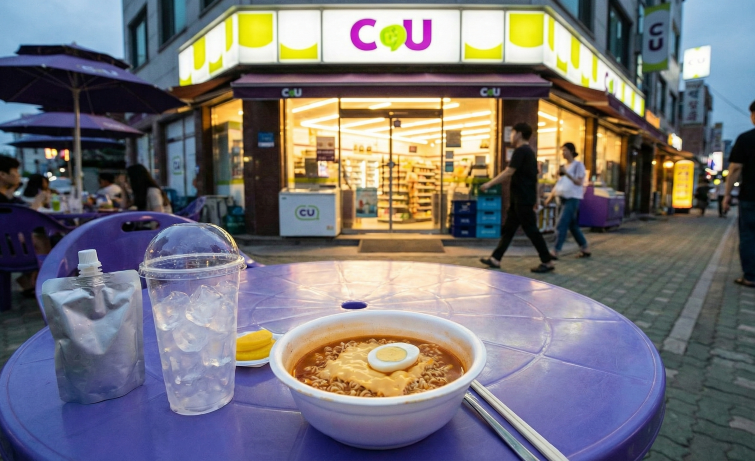
- Summer: This is the era of the “Ice Cup.” You buy a plastic cup filled with ice from the freezer and a pouch of coffee or tart lemonade. Mixing them is a ritual. Sitting at the outdoor plastic tables with a cold drink and a gentle evening breeze is the peak of simple Korean leisure.
- Autumn: As the air gets crisp, the smell of roasting sweet potatoes (gun-goguma) starts to waft from heaters near the counter. It’s the ultimate cozy comfort food for a chilly walk home.
- Winter: This is the season of Hoppang—steamed, fluffy buns filled with red bean, pizza sauce, or sweet custard. Standing inside a warm store while watching the snow fall outside is a quintessential Korean culture experience.
More Than Just Snacks: The “Life Infrastructure”
What truly separates Korean convenience stores from the rest of the world is the sheer variety of services offered. They aren’t just shops; they are mini-community centers.
- The Gourmet Alchemist: You haven’t truly lived until you’ve used the Han River Ramen machines. You buy a pack of instant noodles, and the store provides a paper bowl and a machine that dispenses the perfect amount of boiling water. Add a soft-boiled egg and a slice of cheese from the dairy section, and you have a gourmet meal for under $5.
- The Logistics Hub: Need to send a package? Most stores have a self-service kiosk where you can weigh a box and print a shipping label. It’s often cheaper and faster than the post office.
- Financial Freedom: From withdrawing cash with international cards to recharging your T-Money (transportation) card, these stores keep the city moving.
- The Terrace Culture: In many neighborhoods, the plastic tables and chairs outside the store act as the “neighborhood living room.” It’s a space where the fast pace of Korea slows down, allowing for long conversations and people-watching.
Practical Tips for Your Convenience Store Adventure
To navigate the aisles like a local, keep these tips in mind:
- The “1+1” or “2+1” Rule: Keep an eye out for these tags! They are everywhere. If you grab two of the same drink but the tag says “2+1,” the cashier will often remind you to go grab a third one for free. It’s the golden rule of Korean shopping.
- Eco-Friendly Etiquette: Korea is strict about recycling. Most stores have specific bins for liquids, paper, and plastic. If you eat inside, make sure to clear your table and sort your trash—it’s the polite, local way to do it.
- The Pouch Drink Hack: If you’re overwhelmed by the drink selection, look for the pouches. They are high quality, and the “Black Coffee” or “Aide” pouches paired with an ice cup are a staple of Korean travel tips.
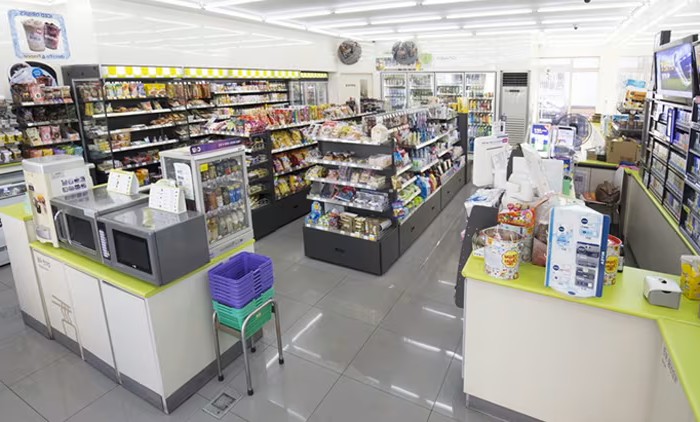
- Microwaves are Your Friend: Don’t be shy! If you buy a triangular kimbap (samgak kimbap) or a ready-made meal, there are always high-powered microwaves available for customer use. 15-20 seconds is usually all you need.
Experience the Simple Life
If you’re planning a trip, finding the nearest store with the best seating—or even one with a view of the Han River—is key. However, Google Maps often struggles with accuracy in Korea. To navigate like a pro, I’ve put together a guide, [Master Your Moves in Korea: When to Use Naver Map vs. Kakao Map], which will ensure you never get lost. With these local apps, you can easily search for top-rated spots, check for rooftop seating, and even find the nearest place to recharge your transit card.
If you’re feeling a bit overwhelmed by the choices or want to dive deeper into the local food scene without the stress, I suggest joining a K-Food Walking Tour. These are guided experiences where a local expert leads you through hidden alleys and bustling traditional markets to taste authentic dishes you might not find on your own. You can easily browse and book these tours through global platforms like Viator, Klook, or Airbnb Experiences. Simply search for “Seoul Street Food Tour” or “Gwangjang Market Walk.” It’s a fantastic way to learn the secret “convenience store recipes” (like mixing specific ramens) and dining etiquette from a pro while meeting fellow travelers.
Recommendation: If you’re heading to the Han River, grab a portable picnic mat and a “4 cans of beer for 11,000 KRW” deal (a classic Korean staple). It’s the most authentic way to enjoy a sunset in Seoul.