When you imagine Seoul, do you see the neon signs of Gangnam or the busy streets of Myeongdong? While the city is famous for its speed and technology, the true heart of Seoul beats a little slower—up in the mountains.
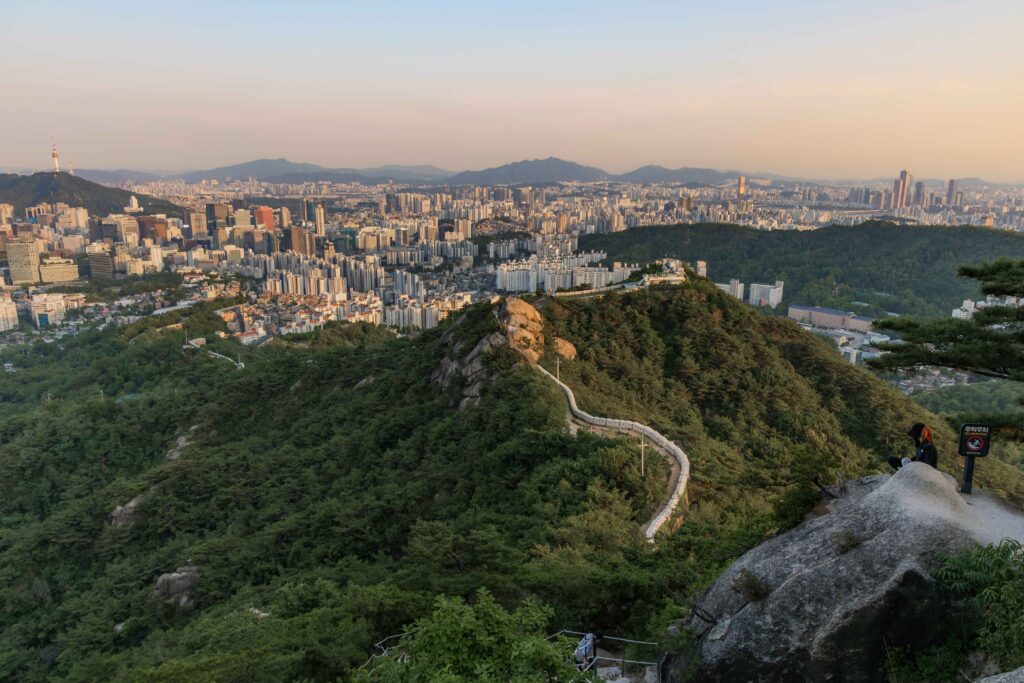
For locals, hiking isn’t a special expedition requiring a car and heavy gear. It is a weekend ritual, a way to wash off the stress of the week. We call this balancing the “Palli-Palli” (Hurry, Hurry) culture with moments of deep breath and nature.
The best part? You don’t need a rental car. Your subway pass is your ticket to the clouds. Here are three mountains that define the Seoul lifestyle, accessible right from the subway station.
1. Inwangsan: A Walk Along History
Subway: Gyeongbokgung Station (Line 3), Exit 1
If you are new to hiking or just want a romantic walk, Inwangsan is the perfect start. It is less of a rugged climb and more of a scenic journey along the ancient Seoul City Wall.
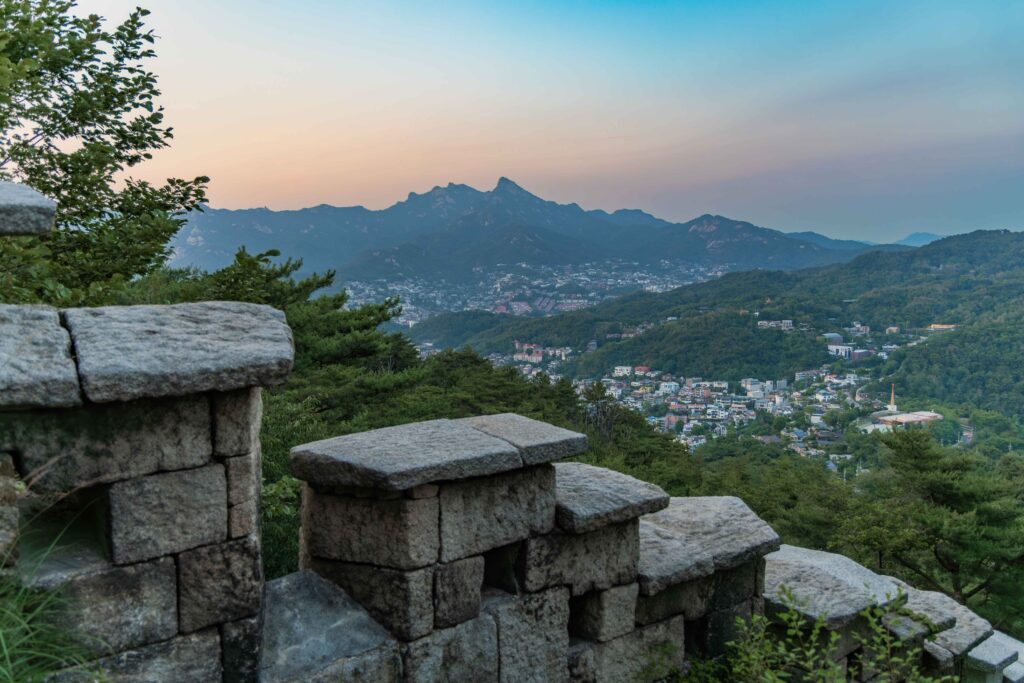
- The Vibe: Unlike other mountains, the path here is well-paved and lit at night. You will see many young couples and office workers enjoying a casual evening stroll.
- Best Season: Spring. The trail is lined with cherry blossoms and yellow forsythia flowers, framing the city view in pink and gold.
- Why It’s Special: The view from the top offers a stunning contrast. On one side, the dark, quiet forest; on the other, the sparkling galaxy of the city center. It is arguably the most beautiful night view in Seoul.
2. Gwanaksan: The Energy of the South
Subway: Gwanaksan Station (Sillim Line), Exit 1
Located in the southern part of Seoul, Gwanaksan has a completely different personality. It is rocky, rugged, and bursting with raw energy.
- The Vibe: This is where you feel the dynamic spirit of Korean hikers. The mountain is rocky, so you’ll need good sneakers, but the view of the rugged peaks is worth the sweat.
- Best Season: Summer. The valleys near the entrance are filled with clear water. Locals love to sit by the stream and dip their feet in the water to cool off after a hike.
- Why It’s Special: The peak features a small hermitage perched precariously on top of a vertical cliff. Seeing this temple clinging to the rock face is a visual shock that photos can’t quite capture.
3. Bukhansan: The Majestic Roof of Seoul
Subway: Bukhansan Ui Station (Ui-Sinseol Line), Exit 2
If you want a true adventure, Bukhansan is the king of Seoul’s mountains. It is a majestic National Park located right inside the metropolis and one of the most visited national parks in the world.
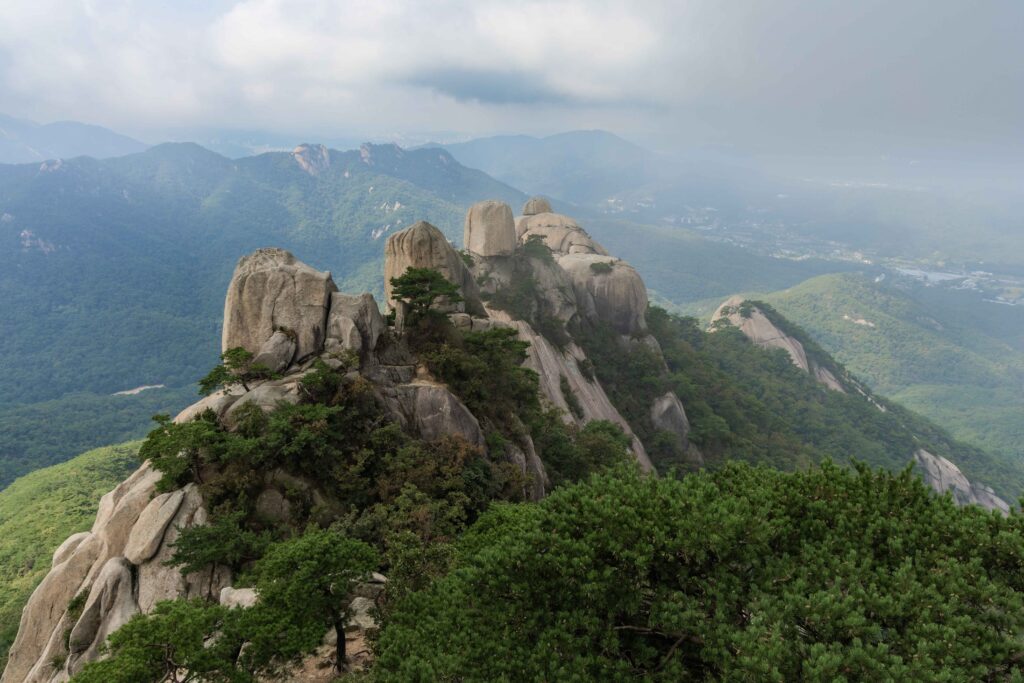
- The Vibe: It is grand and imposing. The granite peaks tower over the city, making you feel small and humble.
- Best Season: Autumn. In October and November, the entire mountain turns into a painting of fiery reds and oranges. It is breathtakingly beautiful.
- Why It’s Special: The final ascent to Baegundae involves using steel cables to navigate the steep granite section. It may look intimidating, but with patience and proper shoes, most determined hikers can make it safely.
How to Enjoy Hiking Like a Local
To truly experience the mountain culture, you need to know the unwritten rules and the rewards that wait for you.
1. The “Proof Shot” Culture
When you reach the summit, you might see a polite line of people waiting. They are not waiting for a bus; they are waiting for their 인증샷 (Proof Shot).
- This is a photo taken next to the summit rock or sign to prove you made it.
- Don’t be shy! Join the line. The person behind you will be happy to take your photo, and Koreans are famously good at finding the best angles.
2. The Real Goal: “After-hike Party“
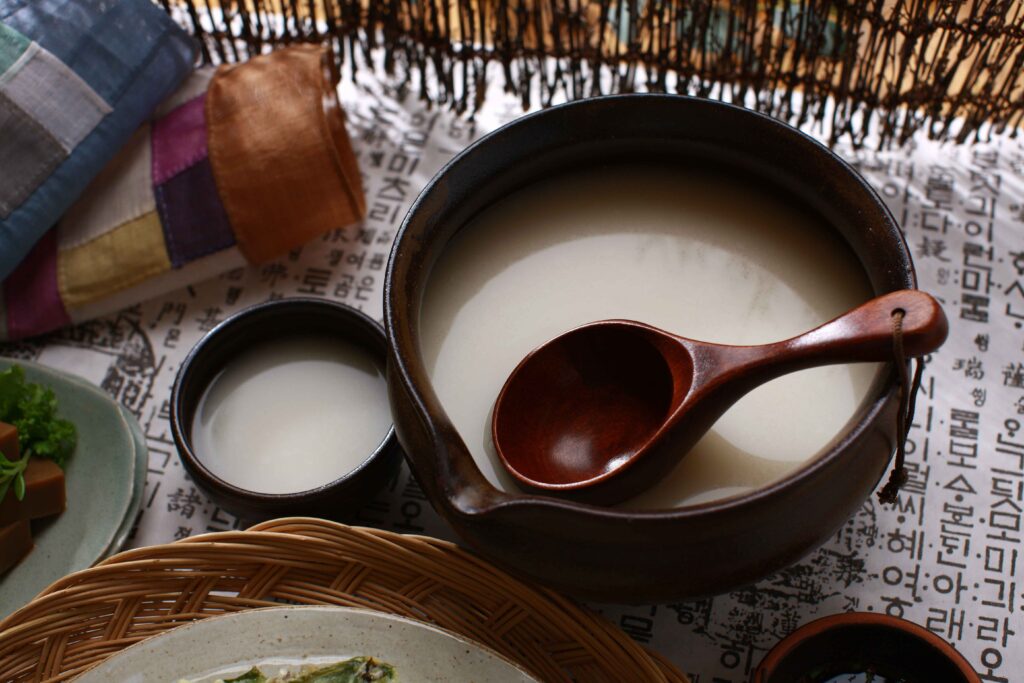
In Korea, the hike isn’t over when you come down the mountain. It’s over when you eat. We call this 뒤풀이 (After-hike Party). Just follow the crowd to the busy restaurants at the base of the mountain and order the “Holy Trinity” of hiking food:
- 파전 (Green Onion Pancake): Crispy, savory, and greasy—perfect for replenishing energy.
- 도토리묵 (Acorn Jelly Salad): Fresh vegetables and acorn jelly in a spicy soy sauce dressing.
- 막걸리 (Rice Wine): A bowl of cold, fizzy rice wine is the ultimate refreshing finish.
Final Thoughts: Smart Tools for a Smooth Hike
Seoul is often described as a fast-paced city, but on these mountains, time slows down.
You don’t need to be an expert climber or hire a guide to enjoy these peaks. With just your T-money card, you have access to world-class hiking trails for less than $2. Before you go, make sure to download NaverMap or KakaoMap, as they offer much more accurate trail navigation in Korea than Google Maps.
So, grab your phone, check the route, and head to the nearest subway station. A breathtaking view and a delicious local meal are waiting for you!
Quick Tip: Curious about the “Climate Card” and “T-money”? Check out my previous posts to find the best option for your trip!
Meet “Climate Card,” Seoul’s New Unlimited Transit Pass
Korea T-money Card Guide: How to Buy & Recharge (Subway/MRT)
Image Credits
- Landscapes (Bukhansan, Inwangsan): ©Korea Tourism Organization Photo korea-An Yeonggwan
- Food Image: ©Korea Tourism Organization Photo korea-Kim Jiho